
InsightsCommercializing Science
What It Takes to Build Trust in Ingredient Innovation
New ingredients do not succeed on science alone. They need clear positioning, credible education, and a market story customers can believe in.
By David Tetzlaf
Ingredient innovation often begins with a technical breakthrough: a new molecule, a better production method, a more sustainable feedstock, or a novel way to improve performance. But technical novelty does not automatically create market demand.
Successful ingredient commercialization requires something more: enough understanding, evidence, and confidence for customers to move from interest to adoption.
For customers, adopting a new ingredient means taking on some degree of risk. They may need to reformulate, validate performance, educate internal teams, qualify a new supplier, revisit regulatory considerations, or explain a new technology to their own customers. Even when the science is strong, there is still a basic commercial question to answer:
Why should someone change what they are already doing?
That is where trust becomes critical.
Trust is not something marketing can add at the end of development. It is built much earlier, through the questions a company asks, the evidence it chooses to generate, the way it listens to customers, and how honestly it translates technical possibility into real-world value.
Trust starts before launch
One of the clearest examples of this for me came at Verdezyne (opens in a new tab), where we were exploring corrosion-inhibitor applications for dodecanedioic acid (DDDA), a bio-based industrial chemical intermediate produced through yeast fermentation. The technology offered a renewable alternative to conventionally produced DDDA, but being bio-based was not enough. If we wanted customers to consider changing what they already used, the product first had to prove that it could perform.
What made that work particularly valuable was that we did not develop the product or its market story in isolation. I spent time working directly with trusted customers to understand how they evaluated corrosion performance, which test methods mattered to them, what performance attributes they considered meaningful, and what they would need to see before considering a new solution.
Those conversations changed the way we approached development.
Rather than assuming that our internal definition of performance would automatically translate to the customer, we brought their evaluation criteria back into our own R&D process. I worked closely with our technical team to understand and reproduce relevant test methods, evaluate formulations through blind testing, interpret the results, and use those findings to guide formulation recommendations.
The result was more than a stronger marketing story. The corrosion-inhibitor formulation that emerged from that process was ultimately judged by customers to perform better than the incumbent solution they were using.
That experience reinforced something I have carried with me ever since:
The market should help define the evidence you need before the market ever sees the launch.
It is tempting for innovative companies to begin with the technology and work outward. What makes the chemistry novel? What makes the production method more sustainable? What makes the platform technically differentiated?
Those questions matter. But they are not necessarily the questions customers are asking.
- Will it work in my application?
- How does it compare with what I use today?
- What would I need to change?
- How confident can I be in the performance?
- What evidence supports that confidence?
The sooner those questions enter the development process, the stronger the eventual commercialization strategy becomes.
Voice of customer, in that sense, is not simply a marketing exercise. It can influence how a product is tested, how applications work is prioritized, what evidence is generated, and ultimately how the value proposition is built.
Some of the strongest launch stories are therefore created long before a campaign begins. They are created in customer conversations, applications work, test protocols, and the sometimes uncomfortable process of understanding what a product still needs to prove.
That is where trust starts.
Translate the science without stripping it of meaning
Once the evidence exists, another challenge begins: how do you make complex science useful to people who were not involved in generating it?
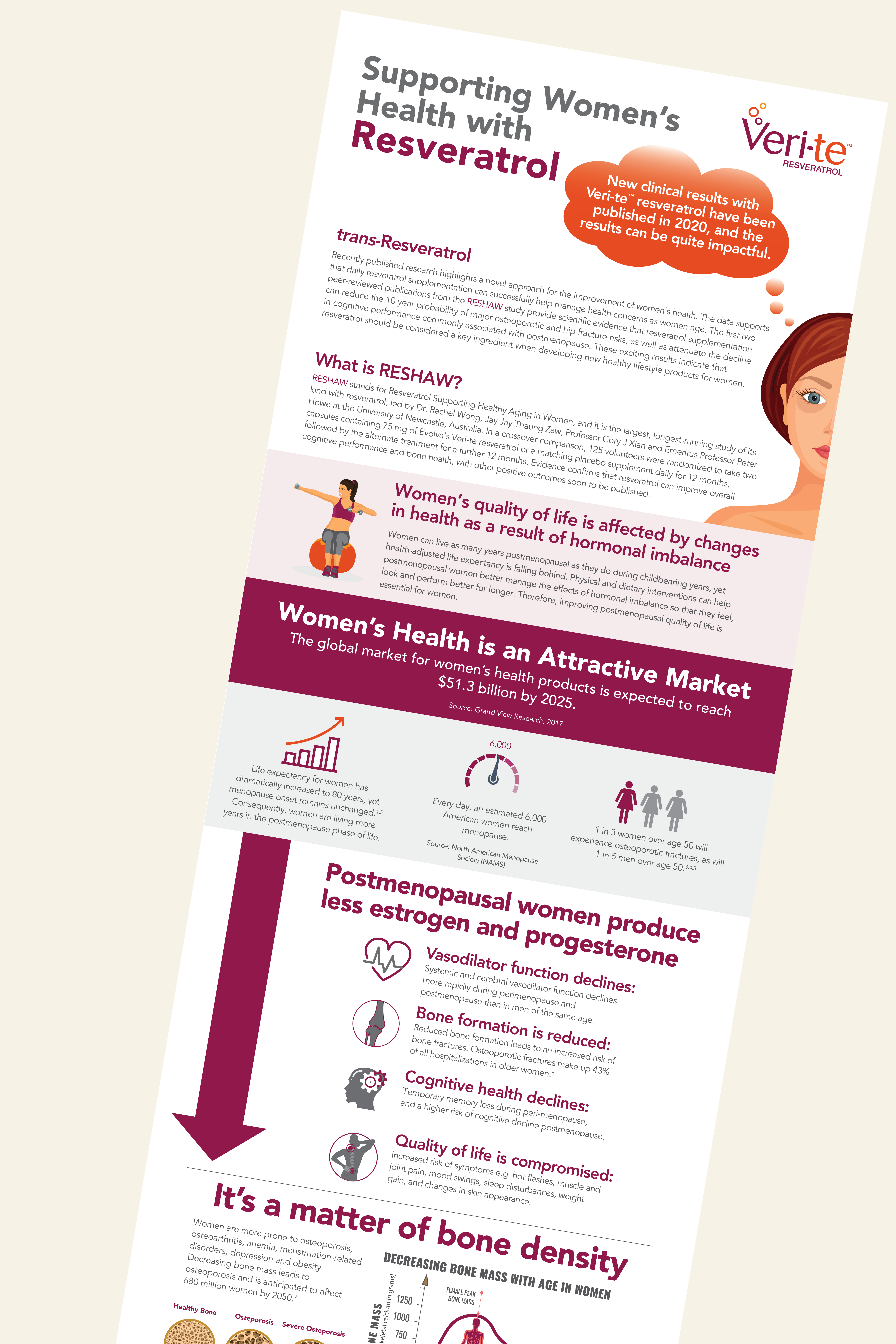
I saw this repeatedly at Evolva (opens in a new tab), particularly through our work with Veri-te™ resveratrol and the RESHAW study (opens in a new tab), a 24-month crossover study involving 125 postmenopausal women. The research evaluated cognition and cerebrovascular function alongside other health outcomes and ultimately resulted in multiple peer-reviewed publications (opens in a new tab). One of the major papers reported improvements in overall cognitive performance as well as several measures of cerebrovascular function following resveratrol supplementation.
While the study was underway, interim findings gave us an opportunity to begin educating the market about where the research was heading. But the real communications opportunity came as the results moved through peer review and publication.
At that point, my job was not simply to repeat what appeared in a scientific paper.
It was to understand the research well enough to determine what mattered, to whom, and at what level of detail.
We could start with a technical white paper that explored the evidence and its scientific context in depth. From that same foundation, we created a RESHAW women’s health infographic (opens in a new tab), brochures, presentations, and sales-enablement materials that made the findings easier to navigate and apply.
We then used those assets in lead-generation campaigns, followed by nurture programs that could progressively deepen the conversation. Someone encountering an advertisement did not need the same level of scientific detail as a technical customer downloading a white paper. But both needed to encounter the same underlying evidence and the same responsible interpretation of it.
That distinction matters.
Scientific translation is sometimes treated as an exercise in making complicated information “simple.” I think that undersells the job. Oversimplification can remove the very context that makes a scientific result credible. On the other hand, reproducing the language of a peer-reviewed paper without interpretation can leave customers wondering what any of it means for them.
The job is not to make the science smaller. It is to make the meaning clearer.
Different audiences need different levels of resolution. A scientist may want to understand study design, endpoints, and limitations. A product developer may want to know how the evidence supports a particular application or consumer need. A salesperson needs to understand both the differentiated value and the boundaries of what can responsibly be said. Marketing has to connect all three without allowing the story to drift as it moves from a publication to a presentation, a website, an advertisement, or a customer conversation.
When that translation is done well, scientific depth does not disappear. It becomes more accessible.
And that accessibility is another way trust is earned.
Performance earns permission
A compelling story may earn an ingredient a first conversation. Performance earns it permission to stay.
I saw this firsthand at Blue California (opens in a new tab) while supporting Sensegen (opens in a new tab), its biotechnology-driven taste, smell, and beauty business. We were developing and promoting flavor solutions for applications such as hard seltzers and non-alcoholic beverages, where an appealing concept still had to survive the realities of formulation.
That meant working closely with applications scientists and formulators to move beyond what sounded interesting on paper and understand what actually worked in the finished product.
One concept we developed was a functional beverage we called Zenergy. It brought together Sensegen’s natural flavors with Blue California's functional ingredients, including caffeine, L-theanine and ergothioneine, along with a stevia sweetener system from our sister company Sweegen (opens in a new tab). From a marketing perspective, there was plenty to talk about. But every additional element also added formulation complexity.
How would the beverage taste? Would the flavor system successfully manage undesirable notes from the functional ingredients and sweetener? Would the components work together in the finished formulation? Were the amounts appropriate for the intended application? What could responsibly be communicated from a regulatory and claims perspective? And, perhaps most importantly, would someone actually enjoy drinking it?
Those questions are easy to underestimate when innovation is still being discussed at the platform or ingredient level.
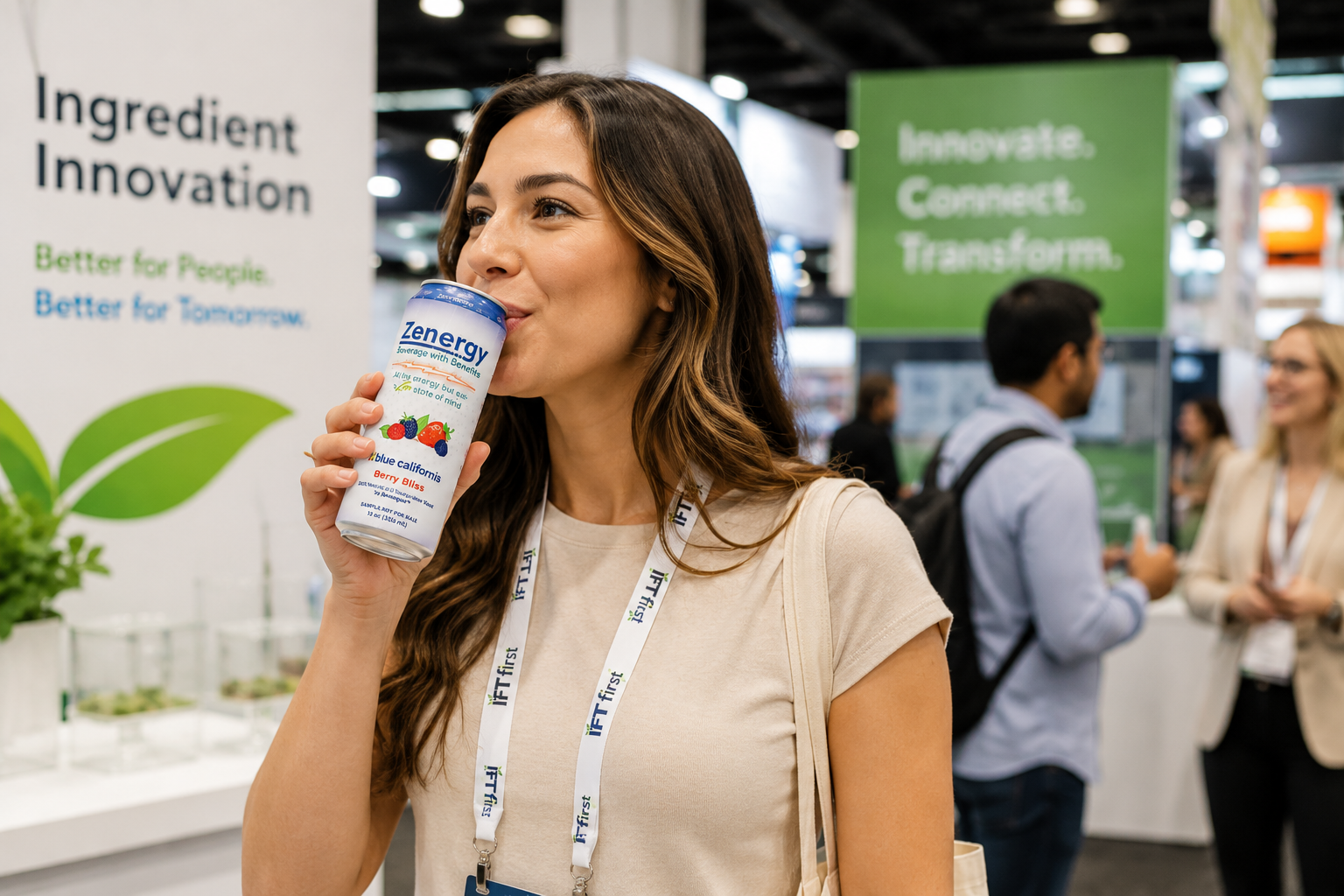
The Zenergy concept ultimately became one of the prototypes we served at industry trade shows, including IFT FIRST (opens in a new tab), where visitors could experience the finished beverage rather than simply hear us describe the technologies behind it. The response was extremely positive. For me, that was an important part of commercialization: turning several technically interesting ingredients into something people could taste, understand, and genuinely enjoy.
 (opens in a new tab)
Customers rarely experience an ingredient in isolation. They experience it in a beverage, supplement, food, personal-care formulation, or another finished product where dozens of variables can influence performance. An ingredient can have an impressive technical story and still create problems with taste, solubility, stability, processing, formulation compatibility, or cost-in-use.
That is why applications work is not simply the final technical step before commercialization. It is part of commercialization.
Marketing and commercial teams need to stay close enough to applications and R&D to understand where an ingredient performs beautifully, where compromises may be required, and which claims or value propositions the finished-product experience can genuinely support.
This is particularly important for sustainable and biotechnology-derived ingredients. A new production method may offer a compelling story around supply resilience, consistency, or environmental impact, but customers are rarely willing to trade away the performance they already have simply because the technology behind an alternative is more innovative.
A sustainability story can strengthen a product that performs. It rarely rescues one that doesn’t.
The same is true of functionality. A compelling health benefit can create interest, but if the resulting beverage tastes unpleasant, the formulation is difficult to manufacture, or the economics do not work, the benefit alone will not create lasting adoption.
Innovation earns attention through possibility.
Performance turns that possibility into something a customer can actually use.
And that is when an ingredient earns permission to move forward.
Trust compounds
Getting a customer to believe in an ingredient once is not the same as earning their trust over time.
I saw that clearly at Evolva with Veri-te™ resveratrol (opens in a new tab). The strength of the product was not built around a single study, claim, or marketing campaign. It came from the accumulation of evidence, scientific support, consistent communication, and customer engagement over time.
Resveratrol was already a familiar ingredient category, which created both an opportunity and a challenge. Customers understood the name, but familiarity also meant they had choices. Differentiation could not rely simply on saying that resveratrol was interesting. We had to show why the science mattered, what supported the claims we were making, and why customers could have confidence in the ingredient behind those claims.
Peer-reviewed research was an important part of that. But research alone does not build a trusted commercial relationship.
Our scientific and commercial teams worked closely together to help customers understand the evidence, answer technical questions, provide supporting materials, and maintain consistency between what the science showed and what sales and marketing communicated.
That consistency matters more than it may seem.
A customer may first encounter an ingredient through an advertisement, a trade show, a LinkedIn post, or an article. From there, they may download a white paper, speak with a salesperson, ask a scientist a technical question, request a sample, review substantiation, or begin evaluating the ingredient internally.
Every one of those interactions either reinforces confidence or weakens it.
If the story changes depending on who is telling it, if the marketing claim stretches beyond the evidence, or if difficult questions are avoided rather than answered, trust can disappear quickly.
But when the opposite happens, trust begins to compound.
The customer hears a consistent message. The technical team can support what marketing has communicated. The evidence holds up under scrutiny. Sales understands both the value proposition and its boundaries. Questions are answered openly. And when something does not work as expected, the conversation remains constructive rather than defensive.
Over time, those experiences move a customer through a progression from skepticism to understanding, from understanding to confidence, and ultimately from confidence to adoption.
SkepticismUnderstandingConfidenceAdoption
That progression is especially important when bringing newer technologies and ingredient platforms to market. Customers are not simply evaluating a molecule or an active. They are evaluating the company behind it: the quality of the evidence, the reliability of the people, the transparency of the communication, and the confidence that support will still be there after the purchase order is signed.
For me, that is where trust becomes something bigger than a marketing objective.
Trust is the cumulative result of a company repeatedly doing what it says it will do, supporting what it claims, and staying credible when the questions become difficult.
And once that kind of trust has been earned, it does more than help secure an initial sale. It creates the confidence that makes future conversations, new applications, and continued adoption easier.
That is how trust compounds.
Innovation needs more than proof
Across very different technologies, ingredients, and markets, I have come back to the same lesson: trust is not something you build around an innovation after the technical work is finished. It is part of the work of bringing that innovation to market.
It begins by listening early enough for customer needs to influence what gets developed and how performance is evaluated. It grows when complex science is translated clearly without overstating what the evidence can support. It becomes tangible when an ingredient performs in a real application, not just under ideal conditions. And it compounds when customers experience the same credibility across marketing, sales, technical support, and every interaction that follows.
For companies commercializing new ingredients, especially those built on biotechnology, fermentation, and other emerging production platforms, this matters because innovation almost always asks someone to change.
A customer may need to evaluate a new supplier, reformulate an existing product, understand unfamiliar science, justify a new technology internally, or take a chance on something without decades of market history behind it.
The stronger the innovation, the easier it can be to focus on what makes the technology different.
But customers ultimately need to understand something more fundamental:
Why does this matter to me, does it work, and can I trust the people behind it?
Answer those questions consistently and the conversation changes.
Science creates the opportunity.Understanding creates relevance.Performance creates confidence.Trust creates the conditions for adoption.
And that is how innovation moves from something technically possible to something the market is willing to choose.
Bringing a new ingredient or technology to market?
Strong science creates the opportunity. Building understanding, confidence, and adoption takes a market strategy designed around what customers actually need.
Explore Go-to-Market StrategyRelated insights

Commercializing Science
From Complex Science to Clear Value
The challenge is not making science sound simple. It is identifying what matters most and connecting technical differentiation to customer value.
Coming soon
Sustainable Ingredients
Why the Future of Ingredients Will Be More Sustainable, Precise, and Functional
The next generation of ingredients will be shaped not by a single technology, but by new ways of combining performance, supply resilience, precision, and sustainability.
Coming soon
Nutrition & Healthy Living
Commercializing Innovation in Food, Beverage, and Nutrition
Getting an ingredient into a commercial product requires more than awareness. It requires solving the practical questions that determine whether customers can actually use it.
Coming soonInterested in building market trust around a new ingredient or technology?
I help science-driven companies connect evidence, customer need, positioning, technical communication, and commercialization strategy to build belief and adoption.